A dog crate size chart takes the guesswork out of buying, but only if you pair it with a tape measure. Your dog’s weight and breed give a rough starting point, and two quick measurements tell you the rest. This guide shows how to measure, what each standard crate size usually holds, and how the main crate styles differ.
How to Measure Your Dog for a Crate
You need a soft tape measure, a treat to keep your dog still, and about two minutes. Measure while your dog stands on a flat floor.
- Length: measure from the tip of the nose to the base of the tail, where the tail meets the body. Do not include the tail itself. Then add 2 to 4 inches.
- Height: measure from the floor to the top of the head (or to the tips of the ears if they stand upright). Then add 2 to 4 inches.
Some guides measure to the tip of the tail instead. If you do that, add a little less on top. Either way, the goal is the same: a dog that can stand without ducking, turn around, and stretch out lying down.
Check the sitting height too
Many dogs are taller sitting than standing, especially breeds with long necks or upright ears. Have your dog sit and confirm there are a couple of inches of room above the head. Also count the bed or mat you plan to put inside, since bedding takes up space.
Why not simply go bigger?
More room is not always better. A crate that is far too large can feel less like a cozy den, and it gives a puppy room to use one end as a bathroom. A crate that is too tight makes it hard to turn or stretch. Aim for a snug but comfortable fit.
Dog Crate Size Chart by Weight
Crates are usually named by their length in inches. The ranges below are typical starting points that many retailers and pet resources use. Makers differ by an inch or two, so always compare your own measurements with the listed interior dimensions.
| Crate length | Typical dog weight | Common crate footprint (L x W x H) |
|---|---|---|
| 18 in | Up to about 6 lb | 18 x 12 x 14 in |
| 22 in | Up to about 12 lb | 22 x 14 x 16 in |
| 24 in | About 13 to 25 lb | 24 x 18 x 20 in |
| 30 in | About 26 to 40 lb | 30 x 20 x 23 in |
| 36 in | About 41 to 70 lb | 36 x 24 x 26 in |
| 42 in | About 71 to 90 lb | 42 x 28 x 30 in |
| 48 in | About 90 to 110 lb | 48 x 30 x 32 in |
Weight is a shortcut, not a rule. A lean, long-legged dog and a stocky, short-legged dog can weigh the same and need different crates. When your measurements and the weight column disagree, trust the tape measure.
What Size Crate for My Dog? Examples by Breed
If you are searching for a dog crate size by breed, the table below lists common examples for each size. These are typical adult dogs, not guarantees. Individual dogs vary a lot within a breed, so use the table to narrow things down and your measurements to decide.
| Crate size | Breed examples (typical adults) |
|---|---|
| 18 in | Toy breed puppies, very small Chihuahuas |
| 22 in | Chihuahua, Maltese, Yorkshire Terrier, Pomeranian |
| 24 in | Shih Tzu, Bichon Frise, Havanese, Miniature Dachshund |
| 30 in | Beagle, French Bulldog, Boston Terrier, Corgi |
| 36 in | English Bulldog, Australian Cattle Dog, Border Collie, Pit Bull type dogs |
| 42 in | Labrador Retriever, Golden Retriever, Boxer |
| 48 in | German Shepherd, Rottweiler, Bernese Mountain Dog |
Corgis, Beagles and Border Collies are a good example of why measuring matters. Depending on build, one dog may be comfortable in the next size down while another needs the next size up.
36 Inch Dog Crate Fits What Breed?
The 36 inch size is one of the most common questions, because it sits in the middle of the range. In most charts it suits medium to larger dogs of roughly 41 to 70 pounds, such as an English Bulldog, an Australian Cattle Dog or a Border Collie. A tall, lean dog may need more height than the listed interior offers, so check the height number as well as the length.
If your dog is close to the top of a weight range, or has a long body, compare the next size up. Crates at 36 inches often come with double doors and lockable wheels, in stainless or heavy duty steel.
Puppies and Dividers
Puppies outgrow crates quickly, and buying a new one every few months adds up. The usual approach is to buy a crate that fits the expected adult size of the breed, then use a divider panel to shrink the space at first. As your puppy grows, move the divider back until the whole crate is available.
- Look up the typical adult weight for the breed, or ask your vet for an estimate if your puppy is a mix.
- Choose a crate that includes a divider, or one that can take one.
- Give the puppy room to stand, turn and lie down, and no more.
- Re-measure every few weeks during fast growth.
A folding crate with a divider, with a tray, is built for exactly this approach.
Dog Crate Types Compared
Size is only half the decision. The type of crate changes how it looks in your home, how it travels, and how easy it is to clean.
Wire crates
Wire crates are open, light to move, and many fold flat for storage. The open sides let air through and let your dog see the room. A cover can add a more den-like feel if your dog likes it.
Heavy-duty metal crates
Thicker metal frames suit larger or strong dogs and tend to stay put better. Many include wheels, trays and more than one door. Look for heavy-duty crates in the 37 to 46 inch range with up to 3 doors, wheels and a removable tray, or rolling crates sold in sizes L to XXL.
Plastic crates
Plastic crates have solid sides and are common for travel. They are easy to wipe clean, though they offer less airflow and view than wire. If you plan to fly, check the airline’s own requirements.
Furniture-style crates
Wood crates are designed to blend in as a side table or console. They usually weigh more and take more effort to clean. Larger sizes, around 43 inches, are available in furniture-style designs that double as an end table.
Outdoor kennels
Outdoor kennels and runs are larger, open-air enclosures, usually with a roof or cover. They are measured in feet rather than inches and are meant for yard use, not for crate training indoors. Galvanized steel with a roof cover is a common build.
Where to Look Next
Once you have your numbers, browse the full range of dog crates, kennels and houses and compare each listing’s interior size to your measurements. Orders ship free from US warehouses.
Common Sizing Mistakes
- Choosing by breed name alone, without measuring the actual dog.
- Measuring to the tail tip but adding the full 4 inches on top.
- Forgetting the thickness of a bed or mat.
- Ignoring height for tall or upright-eared dogs.
- Buying a huge crate for a young puppy and skipping the divider.
If your dog has joint, mobility or growth concerns, ask your vet which entry height and floor setup will work for your dog.
Quick Checklist
- Measure nose to tail base, then add 2 to 4 inches for length.
- Measure floor to top of head, then add 2 to 4 inches for height.
- Check sitting height and bedding space.
- Match the numbers to the crate’s listed interior size.
- Use the weight and breed tables as a guide only.
- For puppies, pick the adult size and add a divider.
- When two sizes seem close, compare the interior dimensions again.
Frequently asked questions
What size crate for my dog?
Measure your dog from nose to the base of the tail and from the floor to the top of the head, then add 2 to 4 inches to each. Match those numbers to the interior size of the crate, and use weight and breed charts as a guide only.
Dog crate size by breed: is a breed chart enough?
A breed chart is a good starting point, but dogs vary within a breed. Two dogs of the same breed can differ in length, height and build, so measure your own dog before you buy.
36 inch dog crate fits what breed?
A 36 inch crate is commonly listed for dogs of roughly 41 to 70 pounds, such as an English Bulldog, Australian Cattle Dog or Border Collie. Check the interior height and length against your own dog.
How big should a puppy crate be?
Most owners buy a crate sized for the expected adult dog and use a divider to reduce the space while the puppy is small. Move the divider back as your puppy grows.
Should I measure my dog standing or sitting?
Measure standing for length and height, then check sitting height too. Many dogs are taller sitting, and you want a couple of inches of room above the head.
Can a crate be too big?
Yes. A crate that is much larger than needed can feel less like a den and may give a puppy room to use one end as a bathroom. Aim for enough space to stand, turn around and lie down.
Last updated October 22, 2026. Figures come from the published sources below. Spot an error? Tell us.
Sources
Shop the categories in this guide
Shop Crates, Kennels & Houses
-
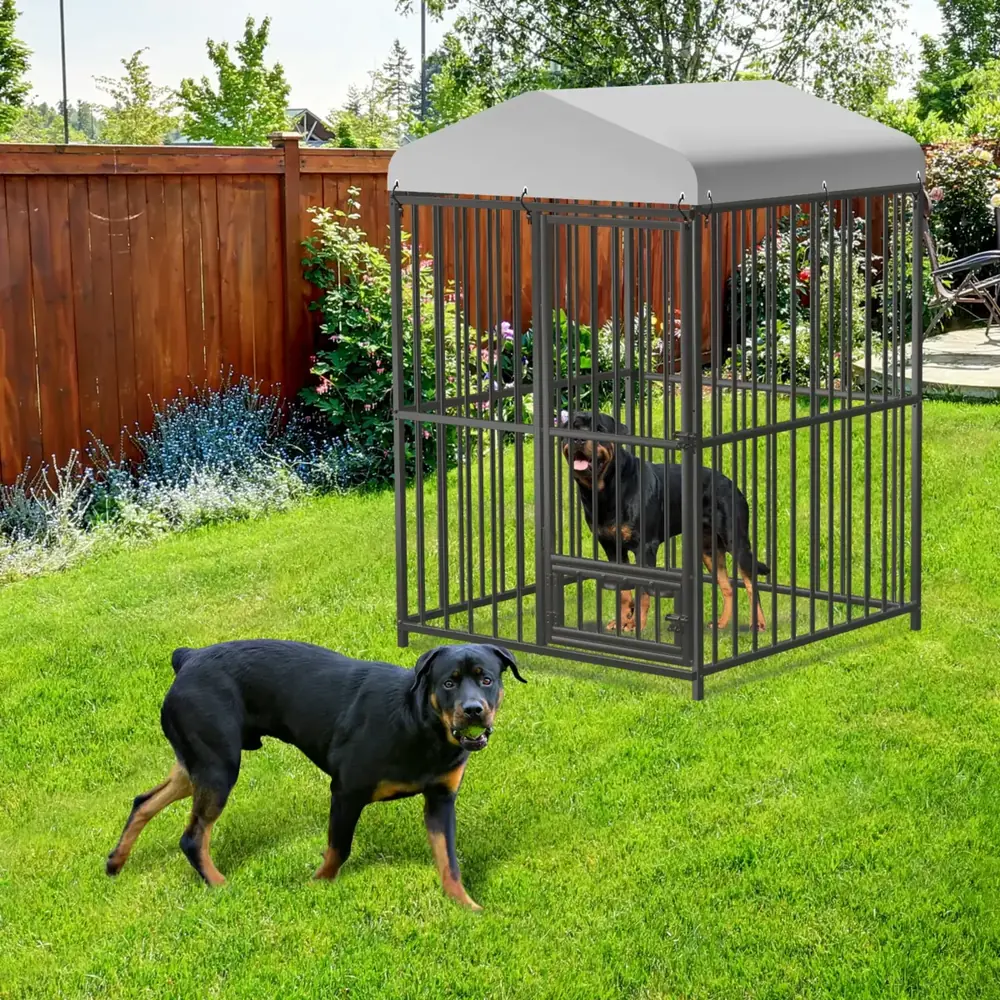
Large Outdoor Dog Kennel with Roof and Lock – Galvanized Iron
FREE shipping Price range: $357.99 through $476.99Select options This product has multiple variants. The options may be chosen on the product page -
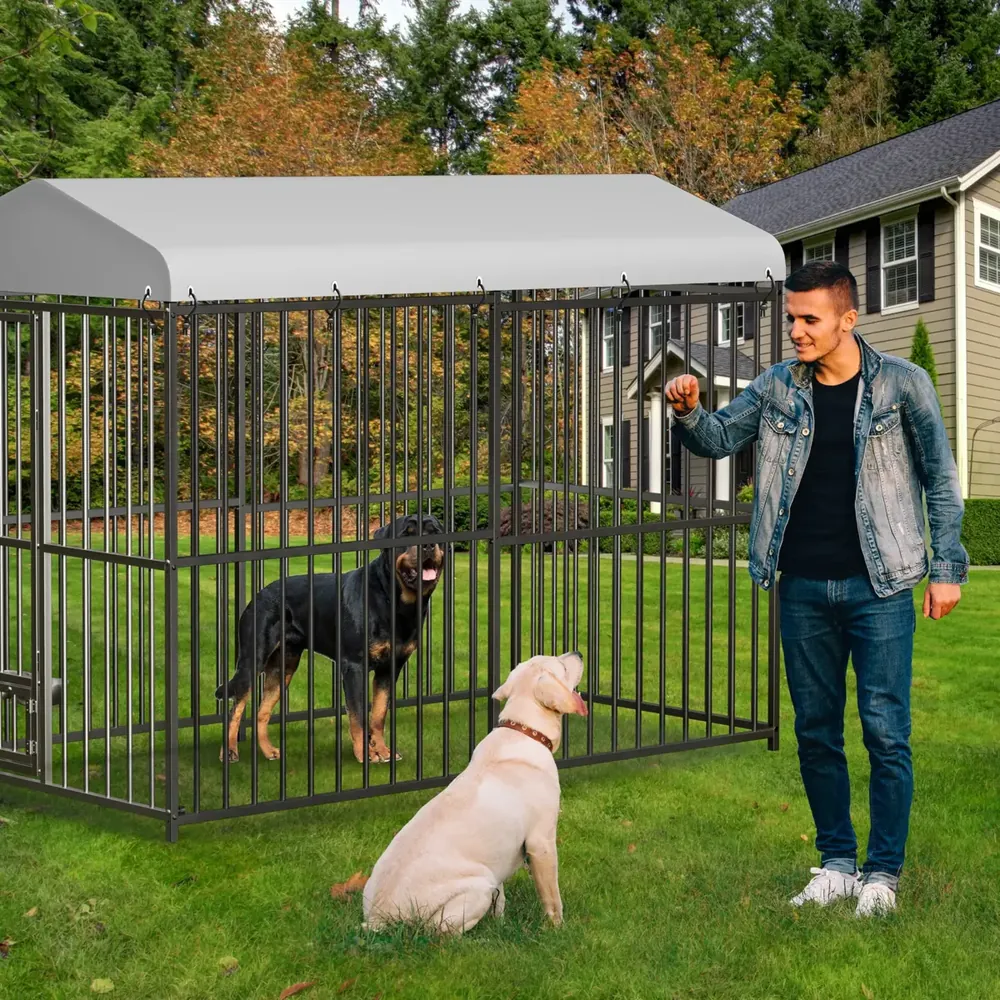
Outdoor Dog Kennel with Roof – Heavy Duty Chain Link, Lockable Door
FREE shipping Price range: $390.99 through $518.99Select options This product has multiple variants. The options may be chosen on the product page -
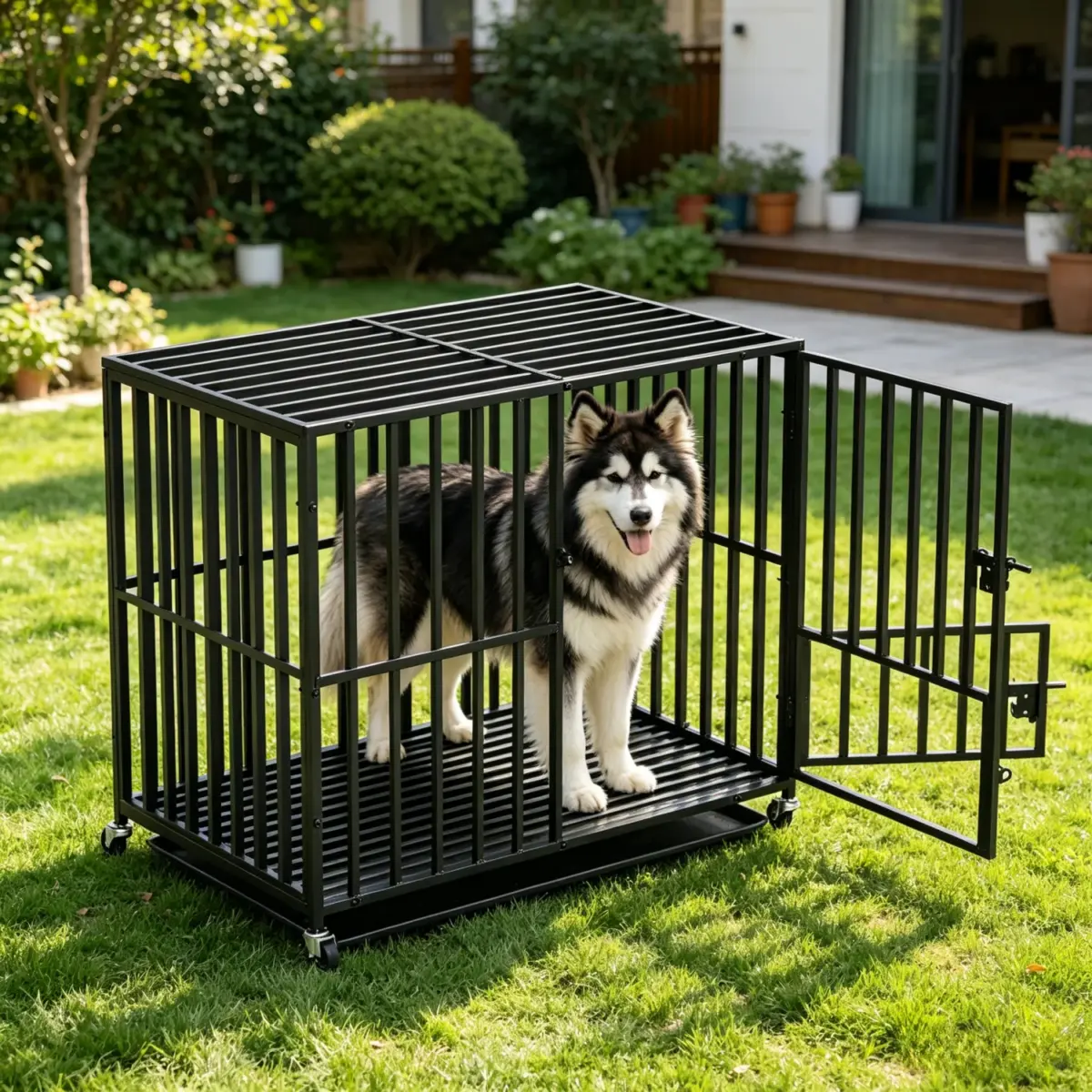
Heavy Duty Dog Crate with Wheels, 3 Doors and Removable Tray
FREE shipping Price range: $349.99 through $535.99Select options This product has multiple variants. The options may be chosen on the product page -
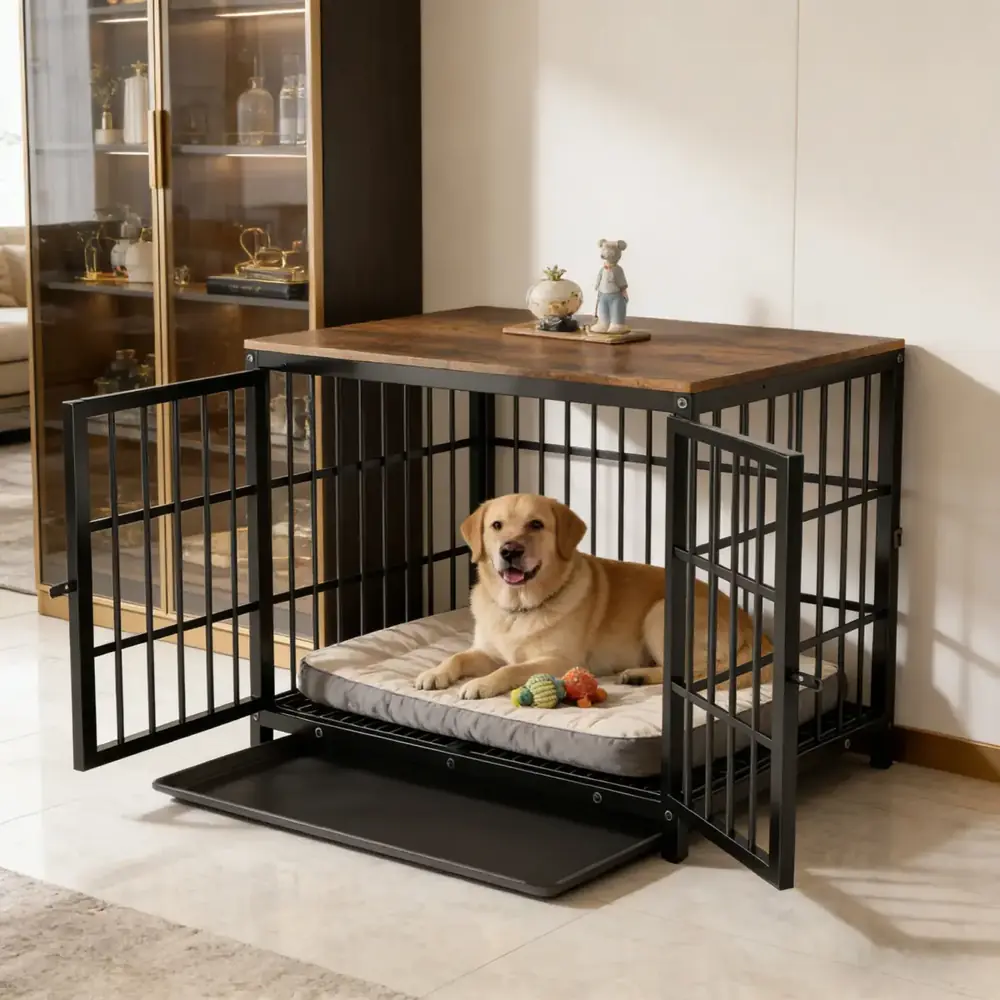
Dog Crate Furniture End Table – 3 Doors, Removable Tray, 4 Sizes
FREE shipping Price range: $282.99 through $823.99Select options This product has multiple variants. The options may be chosen on the product page -
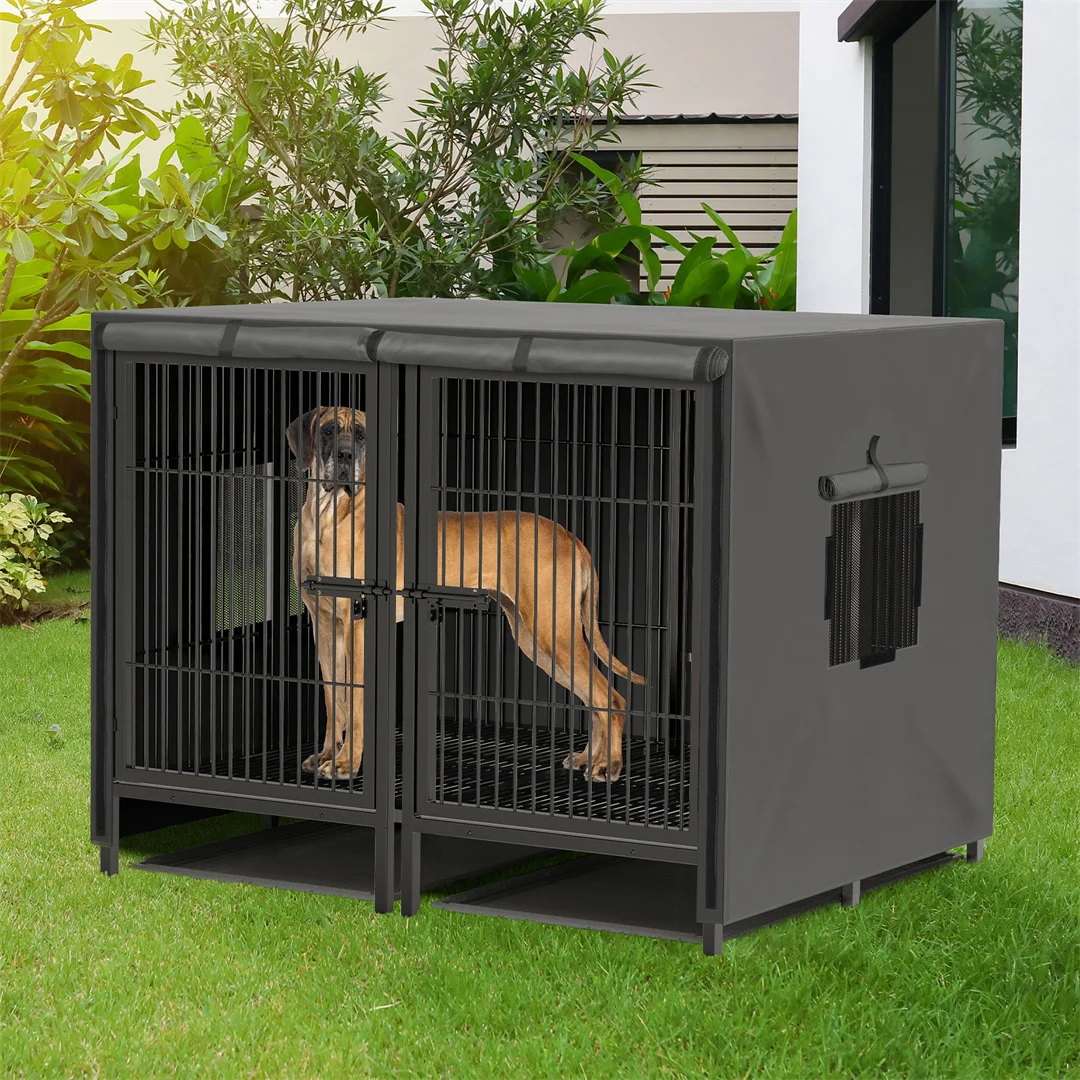
Double Dog Crate 51.5 Inch, Heavy Duty Metal with Divider
FREE shipping Price range: $897.99 through $998.99Select options This product has multiple variants. The options may be chosen on the product page -
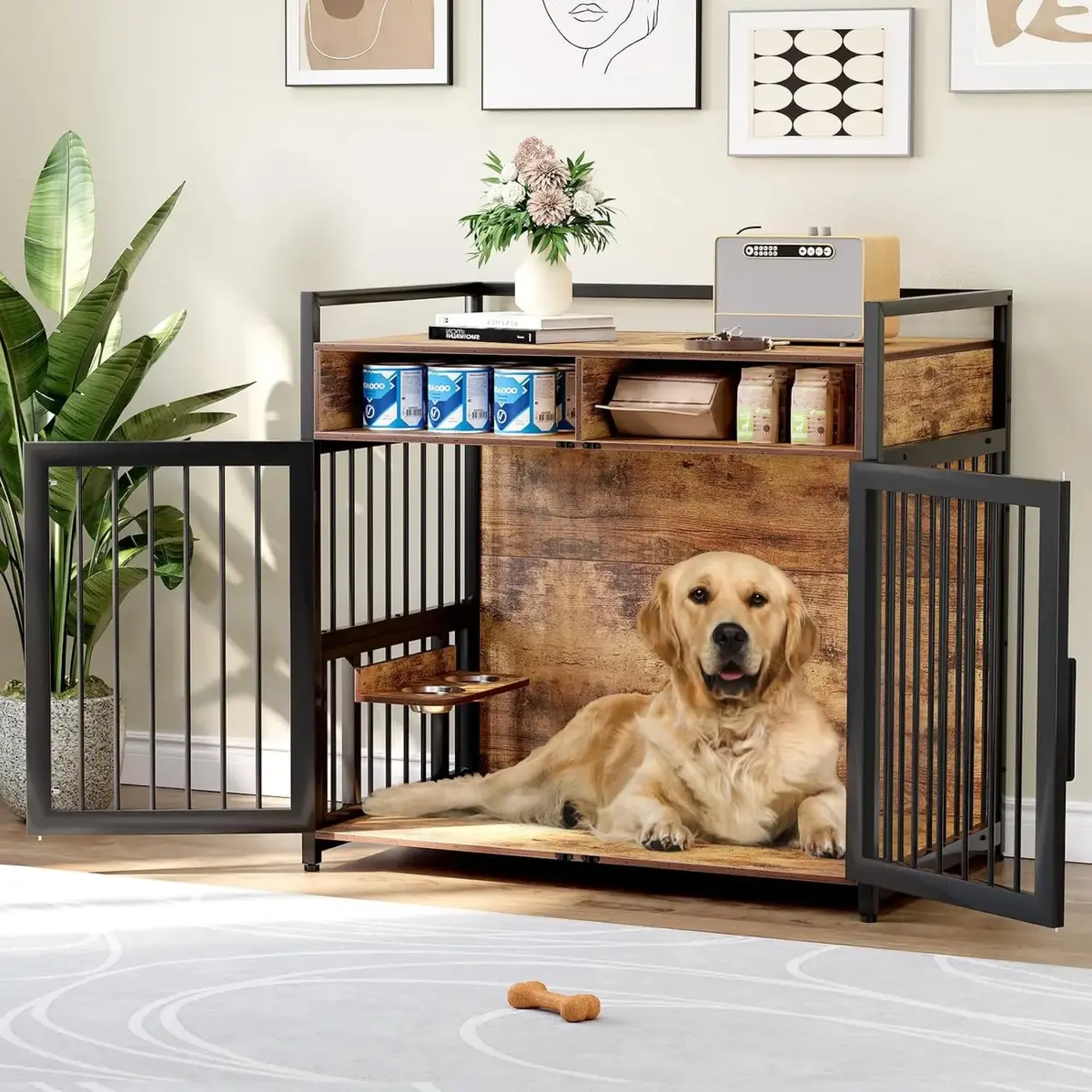
Wooden Dog Crate Furniture with Shelves, Double Doors, 48 in
FREE shipping $707.99Select options This product has multiple variants. The options may be chosen on the product page -
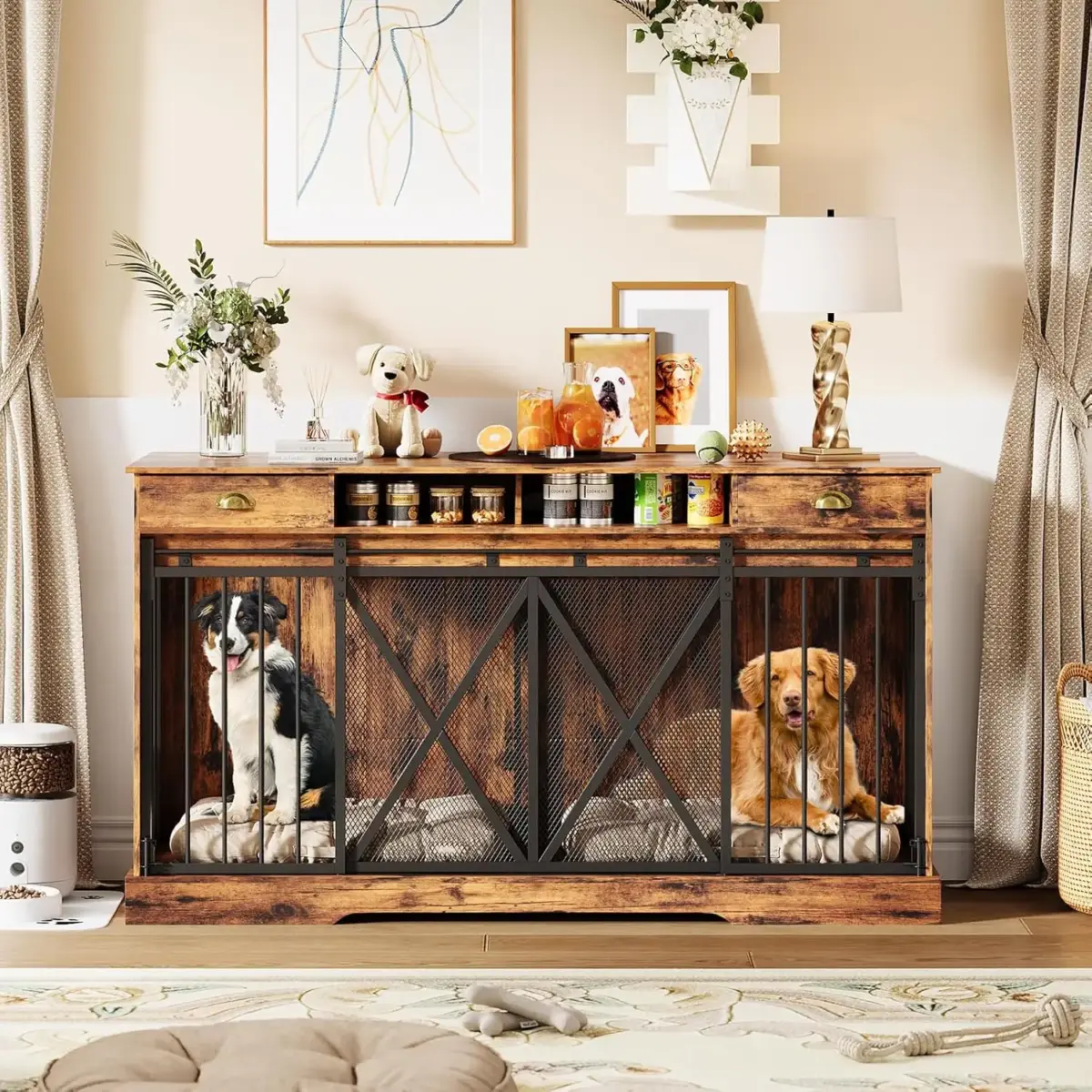
63 Inch Double Dog Crate Furniture with Divider and 2 Drawers
FREE shipping $427.99Select options This product has multiple variants. The options may be chosen on the product page -
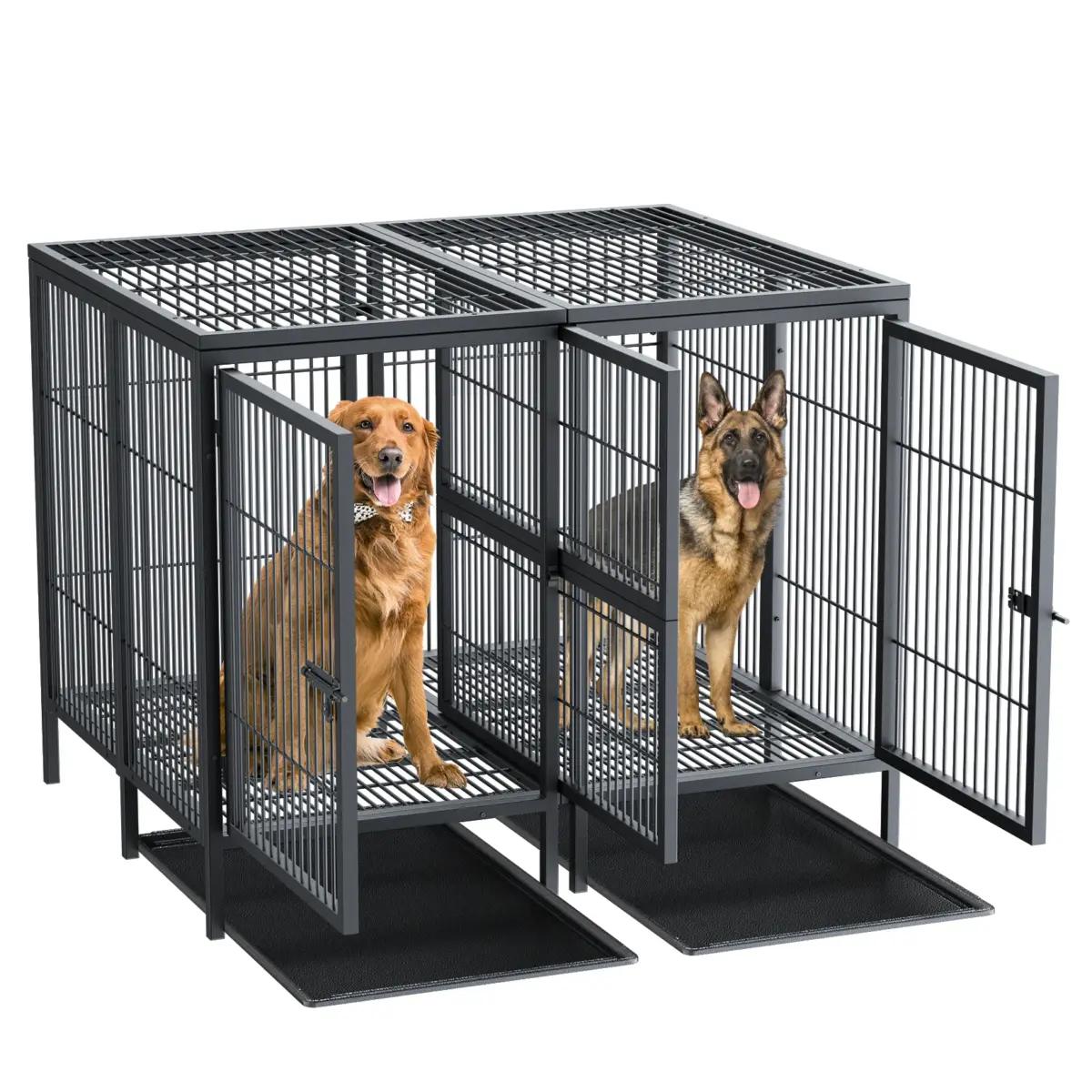
52 Inch Heavy Duty Dog Crate with Divider – 2-Door Metal Kennel
FREE shipping $1,010.99Select options This product has multiple variants. The options may be chosen on the product page