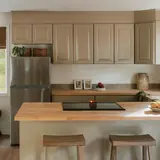
Kitchen organizers only help if they fit. A drawer insert that is half an inch too wide, or a shelf rack that blocks the cabinet door, ends up back in its box. This guide shows how to measure cabinets, drawers and pantry shelves, which organizer types suit each space, and how to plan a kitchen that stays tidy.
Start With a Plan, Not a Purchase
- Empty one area at a time. Take everything out of a cabinet or drawer before you measure.
- Sort by use. Group items you use daily, weekly and rarely. Daily items belong between hip and shoulder height, closest to where you use them.
- Measure, then buy. Write the numbers down for each space and take them with you when you compare listings.
How to Measure
Cabinets
Measure the inside width, depth and height. Then check for things that take space: hinges, the face frame at the opening, a center post between two doors, and shelf supports. The usable width is often narrower at the opening than inside the cabinet, so an organizer must pass through the opening first.
Standard base cabinets are about 24 inches deep on the outside, but the inside depth is usually a few inches less. Wall cabinets are commonly about 12 inches deep.
Drawers
Measure the inside width and depth at the bottom of the drawer, and the inside height. Subtract a little from the height so the drawer still closes when it is full.
Pantry shelves
Measure shelf depth and the clear height to the shelf above. Pantry shelves are often 12 to 16 inches deep; deep shelves benefit from bins or pull-out baskets so nothing gets lost at the back.
Under the sink
Measure around the pipes and the garbage disposal, if you have one. Two-tier racks with adjustable or removable sections are made for this awkward space.
Which Organizer for Which Space
| Space | Organizer types | What to check |
|---|---|---|
| Upper cabinets | Shelf risers, stackable shelves, turntables | Height to the shelf above |
| Base cabinets | Pull-out baskets, pan and lid racks | Opening width and hinge clearance |
| Corner cabinets | Turntables (lazy Susans), swing-out trays | Diameter versus the door opening |
| Drawers | Utensil trays, adjustable dividers, spice inserts | Inside width and depth at the base |
| Pantry | Clear bins, canisters, can racks, tiered shelves | Shelf depth and clear height |
| Under the sink | Two-tier sliding racks, caddies | Pipe positions and door hinges |
| Countertop | Dish racks, spice racks, utensil holders | Footprint and wall outlets |
Spices, Lids and Food Storage Containers
These three cause the most clutter in many kitchens:
- Spices: a tiered shelf in a cabinet, a drawer insert that lays jars at an angle, or a wall rack near the stove all keep labels visible.
- Pot lids: a vertical lid rack or door-mounted holder stops lids from sliding around a stack of pans.
- Food storage containers: keep only containers that have a matching lid, nest them by shape, and store lids upright in a divider.
Materials
Clear plastic bins show what is inside at a glance. Metal wire racks are sturdy and let air move. Bamboo and wood trays look warm in drawers. If an organizer will hold heavy items such as cast iron or stacks of plates, check its listed weight capacity.
Habits That Keep It Working
- Label bins and shelves so everyone puts things back in the same place.
- Keep a little empty space in each area for new items.
- Do a quick reset every few months: check dates in the pantry and remove anything you no longer use.
Browse storage and organization and kitchen and dining, and compare each listing’s dimensions with your measurements.
Frequently asked questions
How do I measure a cabinet for an organizer?
Measure the inside width, depth and height, then check the door opening, hinges and any center post. The organizer has to pass through the opening, which is often narrower than the inside.
What is the best organizer for a corner cabinet?
Turntables (lazy Susans) and swing-out trays make the back of a corner cabinet reachable. Check the diameter against the door opening.
Last updated November 13, 2026. Spot an error? Tell us.
Shop the categories in this guide

Shop Storage & Organization
-
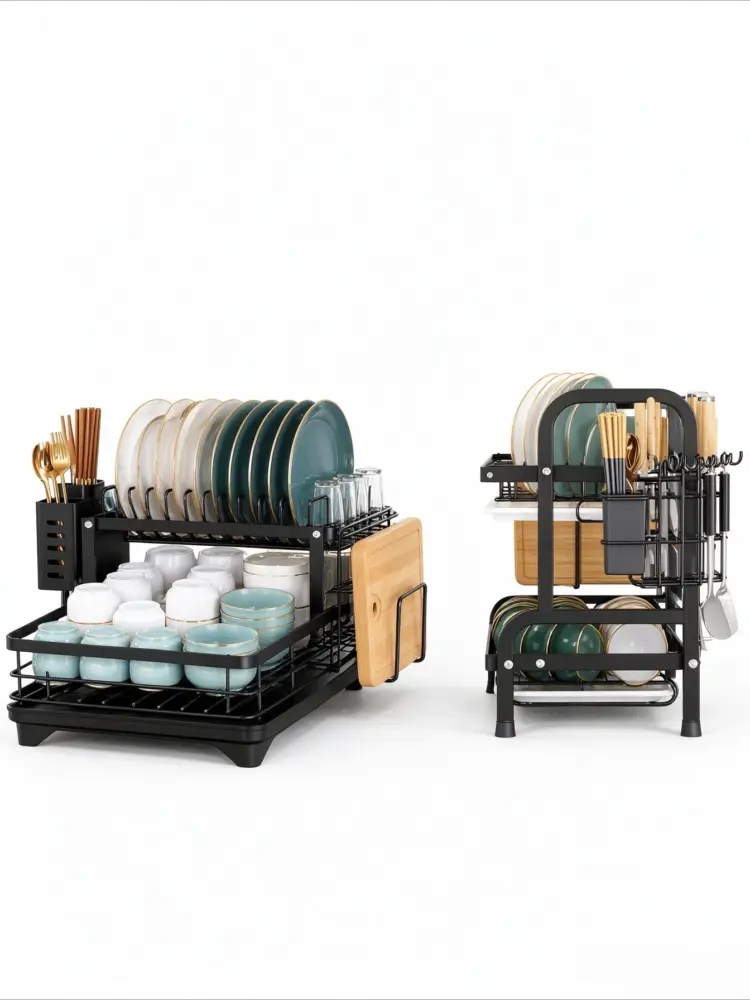
2-Tier Dish Drying Rack with Drainboard – Steel Counter Drainer
FREE shipping Price range: $43.99 through $51.99Select options This product has multiple variants. The options may be chosen on the product page -
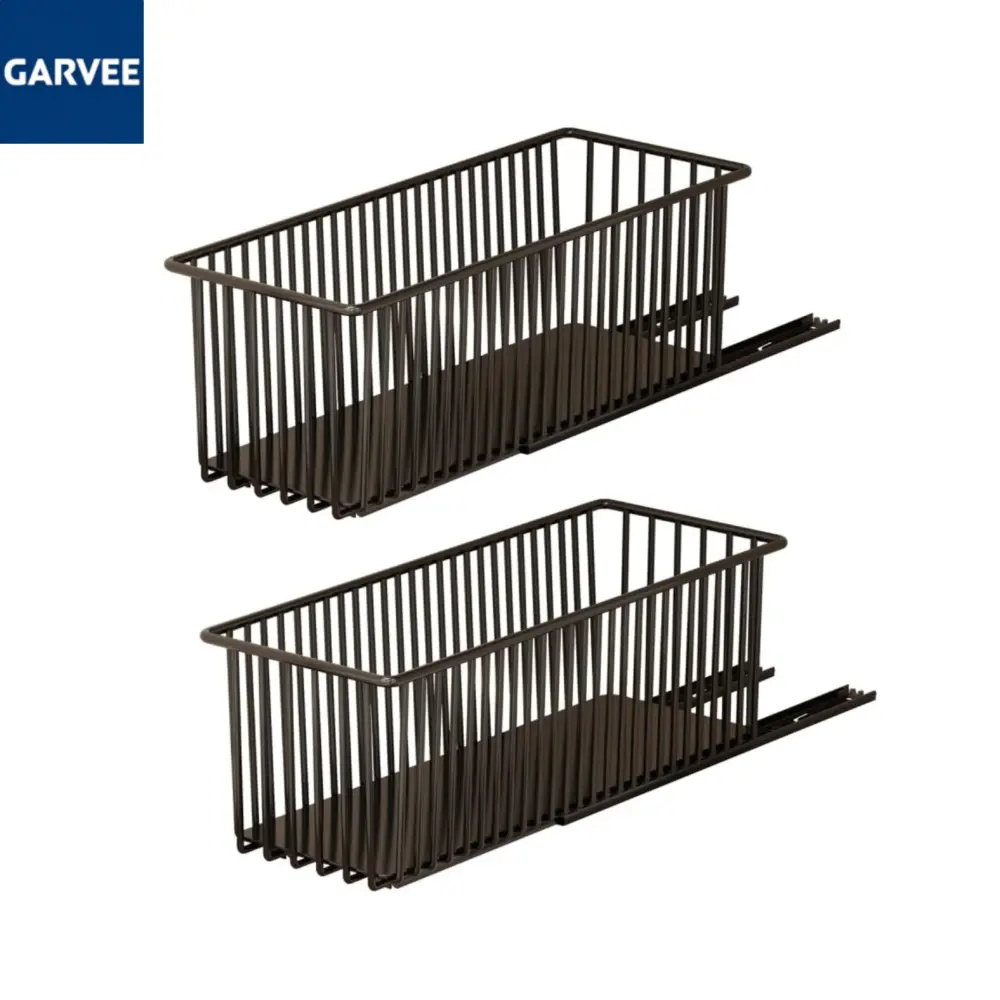
Pull Out Cabinet Organizer Baskets, Carbon Steel, 2 Pack
FREE shipping $36.99Select options This product has multiple variants. The options may be chosen on the product page -
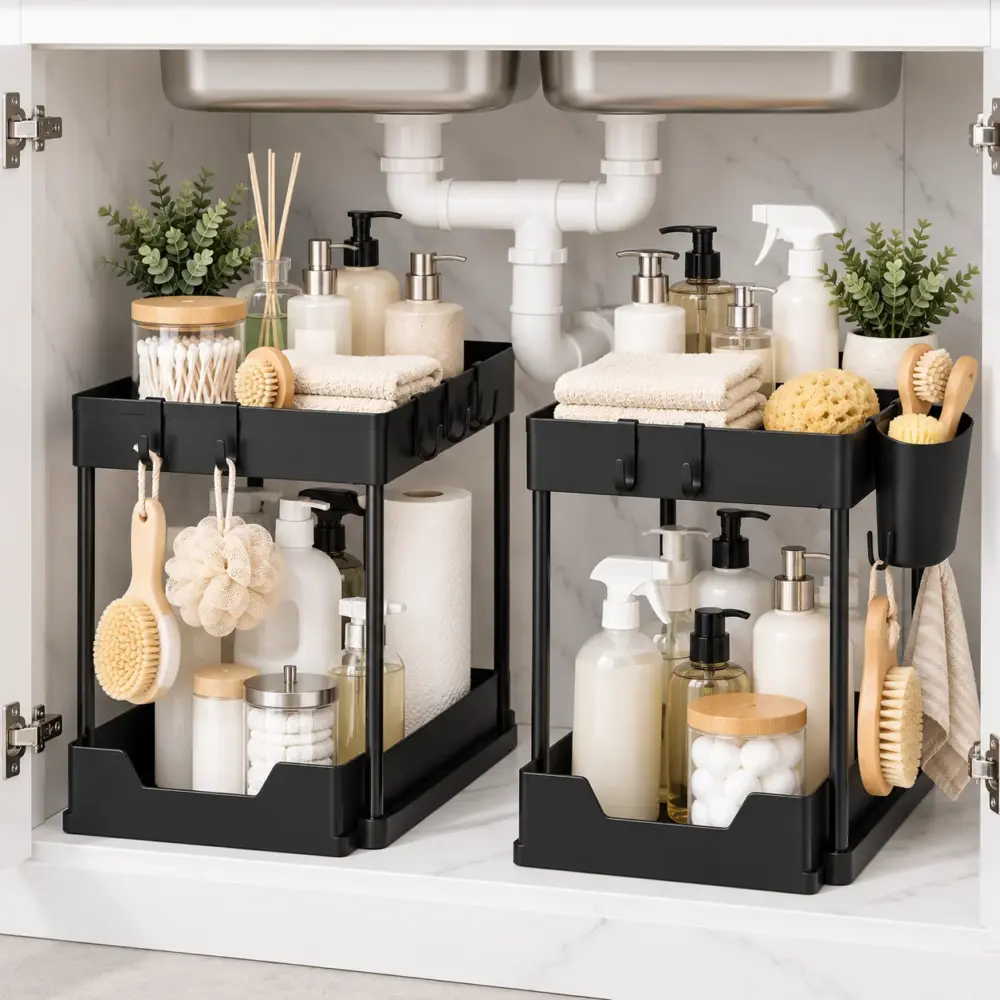
2 Tier Under Sink Organizer with Pull Out Basket and Hooks
FREE shipping Price range: $27.99 through $43.99Select options This product has multiple variants. The options may be chosen on the product page -
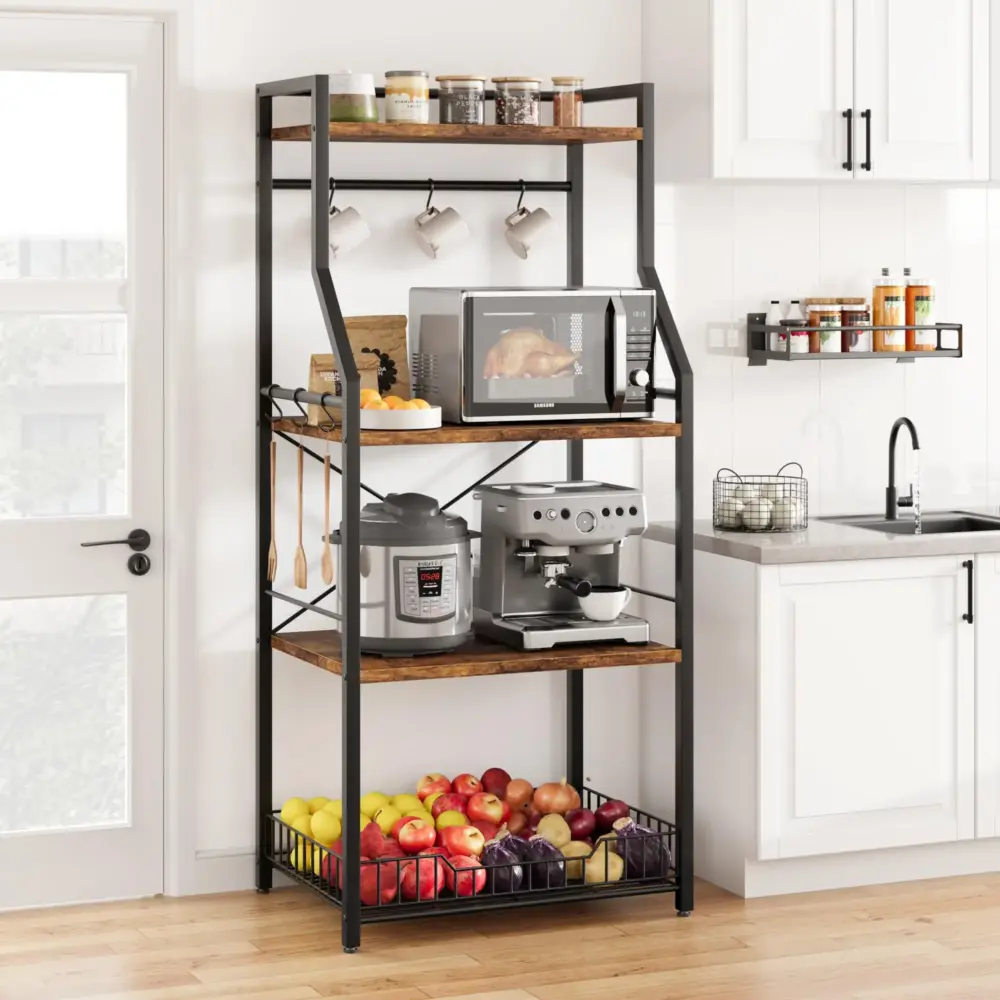
4 Tier Kitchen Bakers Rack with Microwave Stand and Wire Basket
FREE shipping $146.99Select options This product has multiple variants. The options may be chosen on the product page -

12-Jar Rotating Spice Rack Tower, 360 Degree, 2-Tier, Black
FREE shipping $64.99Select options This product has multiple variants. The options may be chosen on the product page -
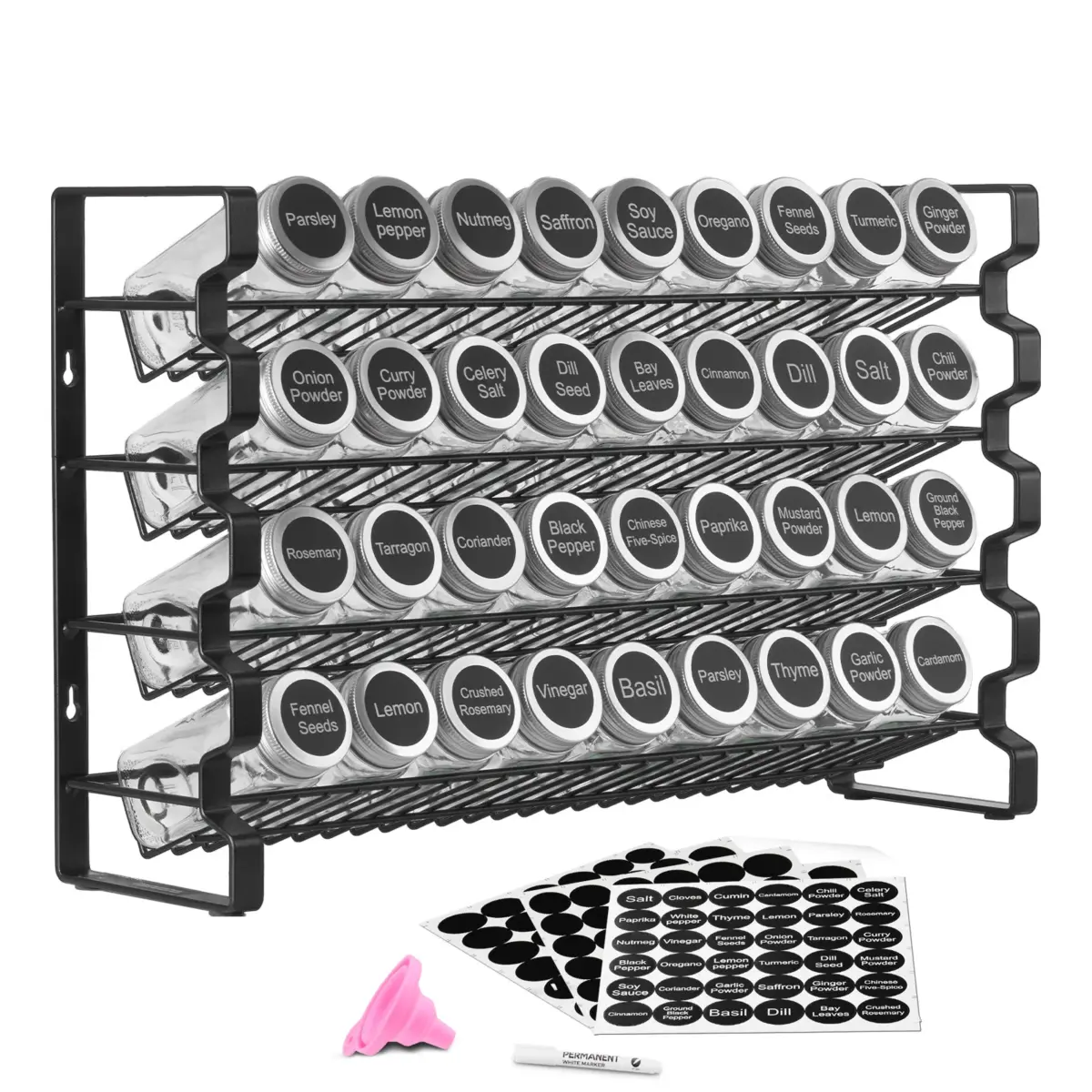
4-Tier Spice Rack Organizer with 36 Glass Jars, Labels and Funnel
FREE shipping $107.99Select options This product has multiple variants. The options may be chosen on the product page -
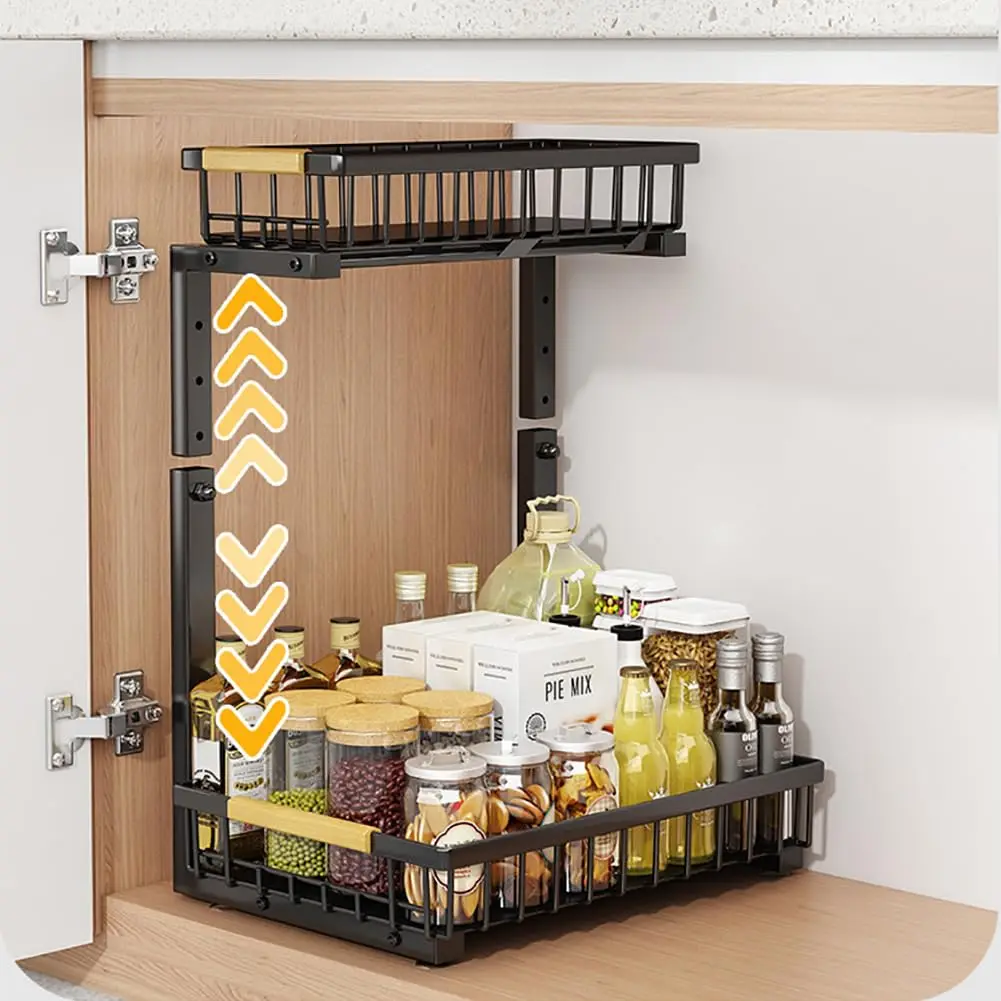
2-Tier Pull-Out Under Sink Organizer, L-Shape Adjustable Metal Rack
FREE shipping Price range: $63.99 through $65.99Select options This product has multiple variants. The options may be chosen on the product page -
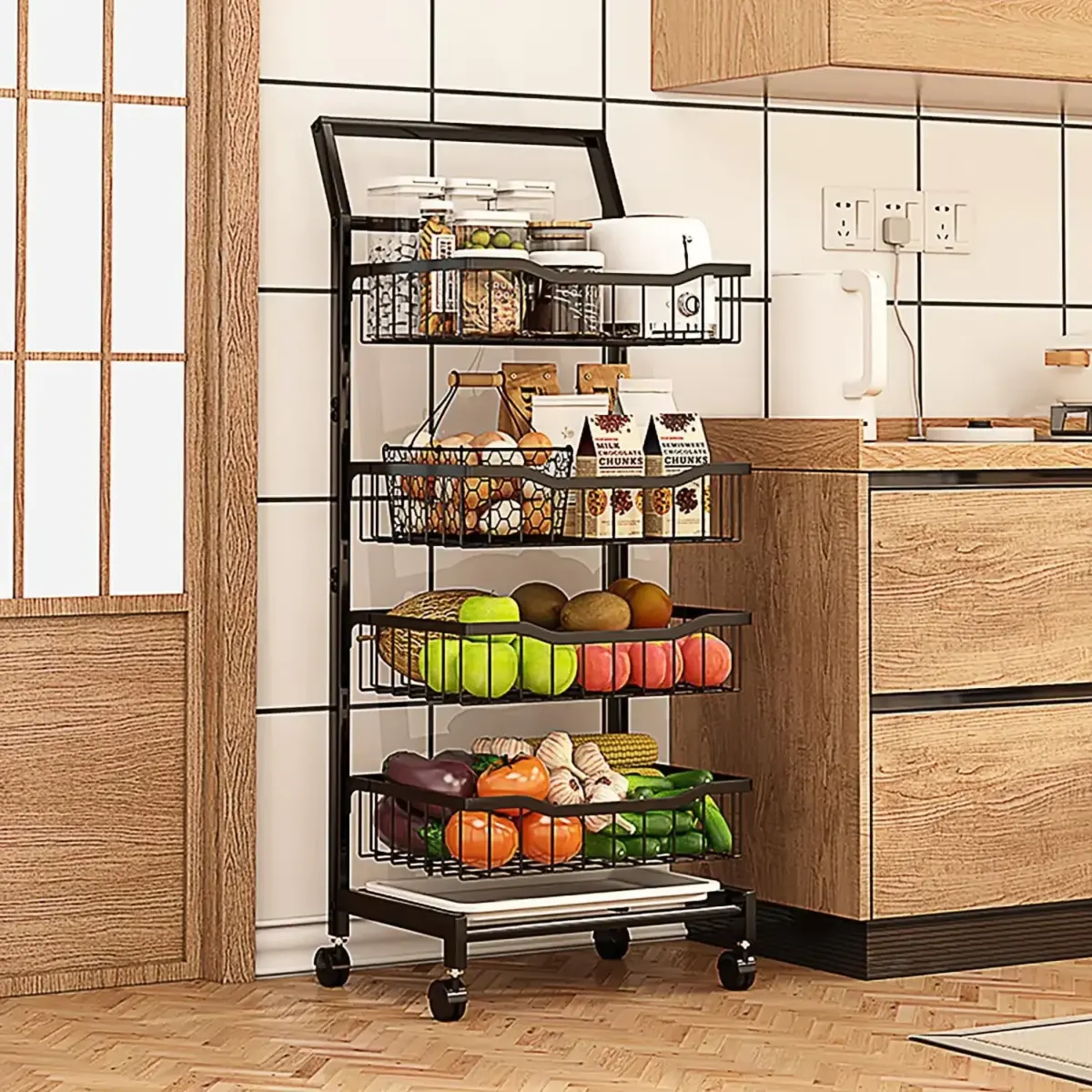
4-Tier Rolling Kitchen Cart with Detachable Baskets and Wood Handle
FREE shipping $95.99Select options This product has multiple variants. The options may be chosen on the product page