This patio umbrella size guide helps you match a canopy to your table, your seating and your yard. A shade that is too small leaves chairs in the sun, and one that is too big can overwhelm a small deck or tip in a gust. Below you will find sizing by table shape, how market, cantilever and rectangular umbrellas differ, base weights by canopy size, and tips on placement and wind.
Patio umbrella size calculator
An estimate from the rules in this guide. Measure your space before you buy.
What size patio umbrella do I need?
Start with one simple rule that most outdoor retailers repeat: the canopy should reach about 2 feet past every edge of the table. In practice, that means the canopy diameter is roughly the table width plus 4 feet.
Chairs matter too. When people pull out a chair, they sit 6 to 8 inches or more beyond the tabletop, so measure the whole seating area if you want shade for everyone, not just the plates.
- Measure the table across its widest point (the diameter for round tables, the length and width for rectangles).
- Add 4 feet to the shorter side to get a minimum canopy width.
- Round up if you often sit at the edges, or if the sun is low in the afternoon.
Canopy size by table size
The chart below turns the 2-foot rule into common table sizes. Retailers differ by a few inches, so treat the numbers as a starting range and check the size rating on the umbrella you are considering.
| Table | Typical seating | Suggested canopy |
|---|---|---|
| 30 to 36 in. round or square | 2 people | 6 to 8 ft |
| 40 to 48 in. round or square | 4 people | 7.5 to 9 ft |
| Up to 54 in. round | 4 to 6 people | 9 ft |
| Up to 62 in. round | 6 people | 10 ft |
| About 72 x 40 in. rectangular | 6 people | 10 x 8 ft rectangular, or a 10 to 11 ft round |
| 84 to 96 in. rectangular | 8 people | 9 x 12 ft or 10 x 13 ft rectangular |
Umbrella size for a 6 person table
For a round six-seat table of about 60 inches, a 10 ft umbrella is the usual answer, and an 11 ft canopy gives more margin. For a rectangular six-seat table, a round canopy often leaves the short ends exposed, so a rectangular canopy of roughly 10 x 8 ft or larger fits better. Whichever shape you pick, the 2-foot overhang rule still applies along the longest sides.
Round, square or rectangular: matching the shape
Shape changes how well the shade covers your seats. A round canopy over a square table reaches only as far as its radius at the corners, so the corners get less cover than the edges. For a square table, a square canopy of a similar size usually covers it more evenly.
- Round table: a round canopy follows the same outline, so use the table diameter plus 4 feet.
- Square table: check the diagonal, not just the side. A 40-inch square table has a diagonal of about 56 inches, which points to a larger round canopy or a square one.
- Rectangular table: choose a rectangular canopy that extends 2 feet past the long sides and ends.
- Lounge seating: pick the umbrella by the footprint of the sofa group, then place it over the center.
Market vs cantilever vs double-sided rectangular
The size you need is only half the decision. The umbrella style decides where the pole stands, how much floor space you keep, and how heavy the base must be.
Market (center-pole) umbrellas
A market umbrella has a pole through the middle. It usually slides through a hole in the table and stands in a base underneath. This style takes the least space and is the simplest to size: match the canopy to the table with the 2-foot rule. A canopy of about 9 feet suits a table of moderate size, and tilt and crank features make it easier to adjust the shade.
Cantilever (offset) umbrellas
A cantilever umbrella, also called an offset umbrella, has its pole to the side and the canopy hangs over the seating. The pole is out of the way, which helps over lounge sets and around grills. The trade-off is leverage: the canopy acts like a long arm, so the base needs far more weight than a center-pole umbrella of the same size. Cantilever models are commonly sold with 10 ft canopies and a cross base.
Because the canopy sits to one side of the pole, plan the footprint of both the base and the swing. Leave room to rotate or tilt it without hitting a wall, railing or tree.
Double-sided rectangular umbrellas
Double-sided umbrellas have two canopies on one pole, or a large rectangular canopy, and cover long tables or wide seating areas. They suit larger decks and dining tables for eight or more. Canopies of around 13 feet, often with crank and tilt, are common in that size class. Wide canopies catch more wind, so they need a heavier base and more care in gusty weather.
Base weight by umbrella size
Base weight keeps the umbrella upright. Retailers publish slightly different ranges, but they agree on the pattern: bigger canopies need heavier bases, freestanding umbrellas need more weight than ones supported by a table, and cantilever umbrellas need the most.
Umbrella base weight chart
| Umbrella type and size | Common base weight range | Notes |
|---|---|---|
| Market, 6 to 7.5 ft | About 35 to 50 lb | A lighter base is fine when the pole passes through a table |
| Market, 7.5 to 9 ft | 50 to 75 lb | About 50 to 60 lb is common for 8 ft |
| Market, 9 to 11 ft | 75 to 100 lb | About 75 lb is a common floor for 10 ft |
| Cantilever, up to 10 ft | 100 to 150 lb | Many sellers advise going higher in open yards |
| Cantilever, 10 to 13 ft | 150 to 200 lb or more | Some guides list 220 lb or more for 11 ft |
These are guidelines, not engineering standards. The weight listed in the umbrella’s own manual or product page always comes first.
Cantilever umbrella base weight
If you are shopping for a cantilever umbrella base weight, think in terms of total filled weight. Many cantilever bases arrive as empty plastic or steel shells that you fill with sand or water, and the listed capacity is the number that counts. Sand is denser than water, so the same shell holds more weight with sand. If one set is not enough, you can place additional weights around the pole.
Two practical options are a weight set made for offset umbrellas and a heavy duty base weight set that you fill with water or sand.
In-table vs freestanding
When the pole passes through a table, the table adds some stability, and a lighter base can work. A freestanding market umbrella has nothing to lean on, so add roughly 20 lb to the numbers above. A sturdy table also helps more than a light folding one, so do not count on a flimsy table to hold a large canopy.
Clearance and placement
A good umbrella is high enough to walk under and low enough to block the sun. Aim for a lowest canopy edge of about 7 ft above the ground when open, so tall guests can stand up without ducking.
- Leave 2 to 3 feet around the table so chairs can slide back in the shade.
- Keep the open canopy away from walls, eaves, railings and branches, and check the sweep before you tilt it.
- Place the pole where the base will not block foot traffic or a door swing.
- Remember that the sun moves. Tilt and crank mechanisms let you follow it without moving furniture.
- For a cantilever umbrella, set the base on a flat, level surface such as a patio slab or deck, not on loose soil or sloping ground.
Wind and stability
Wind is the main reason umbrellas fall over, and canopy size makes the effect bigger. A few plain habits help:
- Choose a base at the upper end of the weight range if your space is open or breezy.
- Close and secure the umbrella when it is windy or when no one is sitting under it.
- Take it down for strong storms, and do not leave a large canopy open overnight.
- Add extra weights such as sandbags around a cantilever base for added stability.
- Vented canopies release some air pressure, which helps in light gusts.
If you have many gusty days, a smaller canopy with a heavier base is often easier to live with than the largest size you can fit.
Where to shop
You can browse umbrellas, bases and more in the outdoor furniture category. Shipping is free on every order from US warehouses, usually in 3 to 8 business days.
Quick checklist
- Measure the table and the full seating area.
- Add 4 feet to the table width for the minimum canopy size.
- Match canopy shape to table shape; use rectangular for long tables.
- Pick market for simple table shade, cantilever for open lounge areas.
- Choose a base from the weight chart, then go heavier for cantilever, freestanding or windy spots.
- Leave about 7 feet of headroom and 2 to 3 feet around the table.
- Close the umbrella in strong wind.
Frequently asked questions
What size patio umbrella do I need for my table?
Add about 4 feet to the table width so the canopy reaches roughly 2 feet past each edge. A 48-inch table usually pairs with a 7.5 to 9 ft umbrella, and a table up to 62 inches fits a 10 ft umbrella.
What umbrella size works for a 6 person table?
A round table of about 60 inches usually calls for a 10 ft umbrella, with 11 ft giving extra margin. For a rectangular six-seat table, a rectangular canopy around 10 x 8 ft covers the ends better than a round one.
How heavy should a cantilever umbrella base be?
Retail guides commonly list at least 100 lb for a cantilever umbrella, about 100 to 150 lb up to 10 ft, and 150 to 200 lb or more for 10 to 13 ft canopies. Check the umbrella's own manual and go heavier in windy spots.
Do I need a heavier base if the umbrella is not going through a table?
Yes. A table adds stability, while a freestanding umbrella has nothing to lean on. Many guides suggest adding roughly 20 lb to the usual base weight for freestanding use.
Is a cantilever or a market umbrella better for a dining table?
A market umbrella with a pole through the table is simpler and needs a lighter base. A cantilever umbrella keeps the pole off to the side, which suits lounge areas and tables without an umbrella hole, but it needs a much heavier base.
What should I do with the umbrella in strong wind?
Close and secure it, or take it down for storms. A heavier base and a vented canopy help in light gusts, but they do not make it a good idea to leave a large canopy open in strong wind.
Last updated October 22, 2026. Figures come from the published sources below. Spot an error? Tell us.
Sources
Shop the categories in this guide


Shop Outdoor Furniture
-
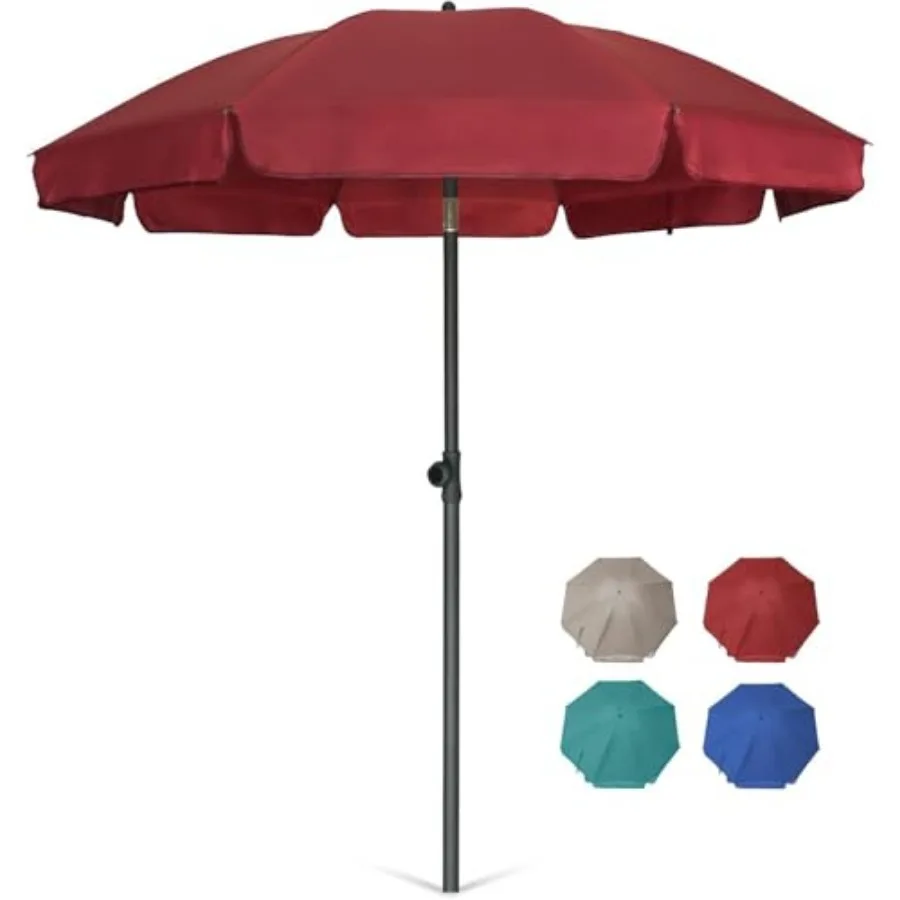
6.5 ft Patio Table Umbrella with Tilt – Steel Pole, 4 Color Choices
FREE shipping Price range: $114.99 through $117.99Select options This product has multiple variants. The options may be chosen on the product page -
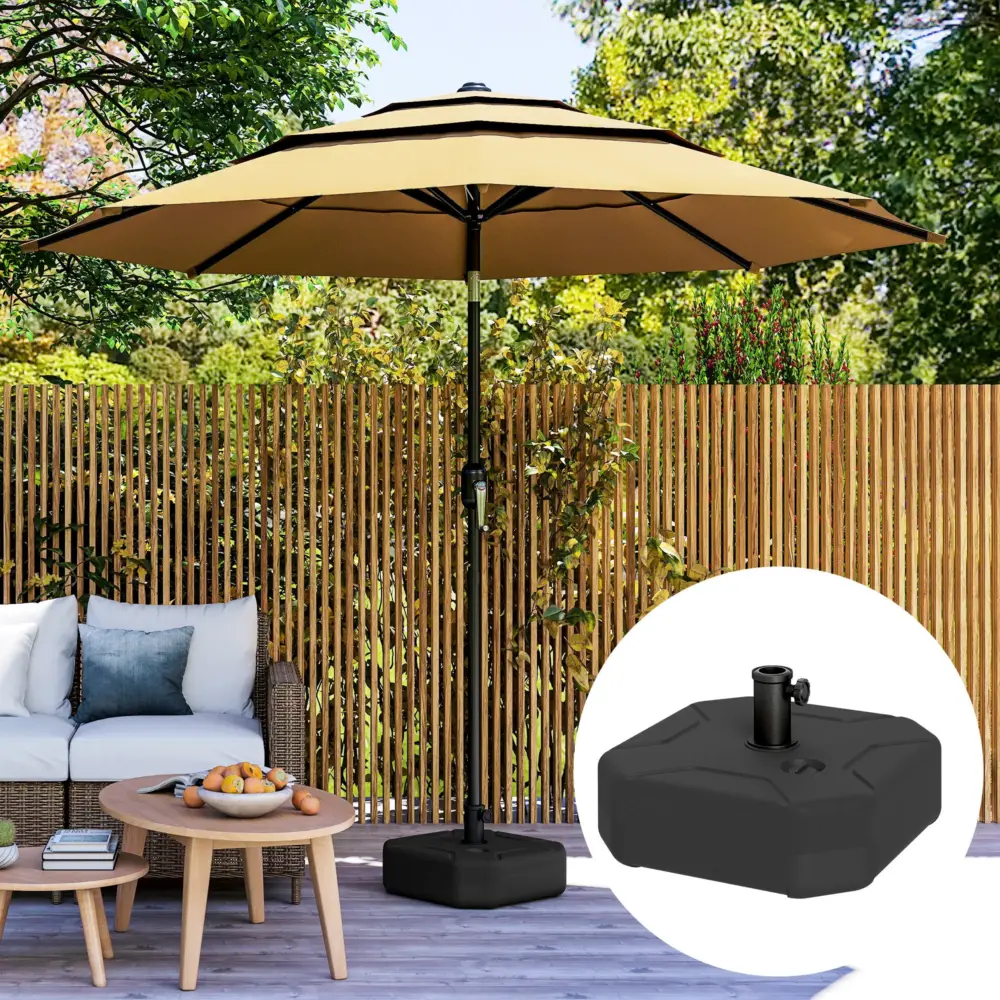
Fillable Umbrella Stand Base – HDPE, 55 lb with Sand, 44 lb with Water
FREE shipping $86.99Select options This product has multiple variants. The options may be chosen on the product page -
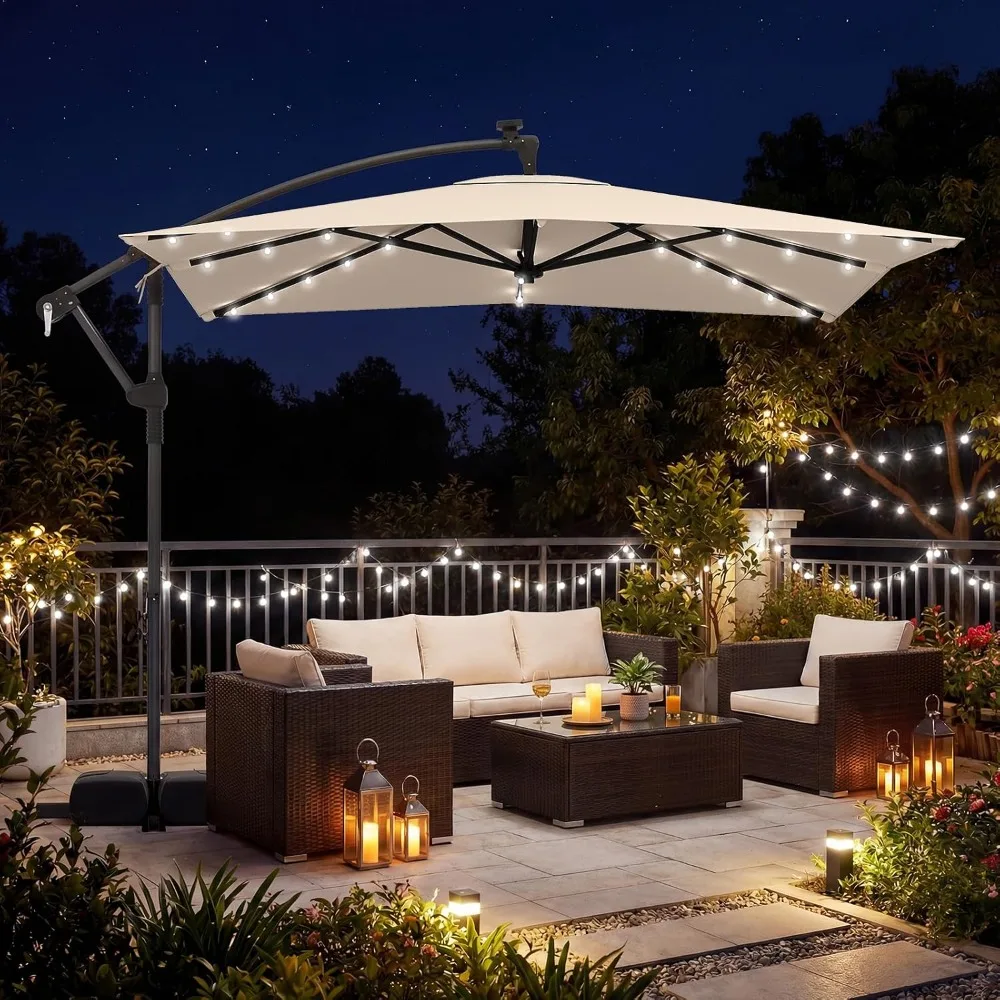
8×8 ft Offset Cantilever Patio Umbrella with 32 Solar LED Lights
FREE shipping Price range: $154.99 through $184.99Select options This product has multiple variants. The options may be chosen on the product page -
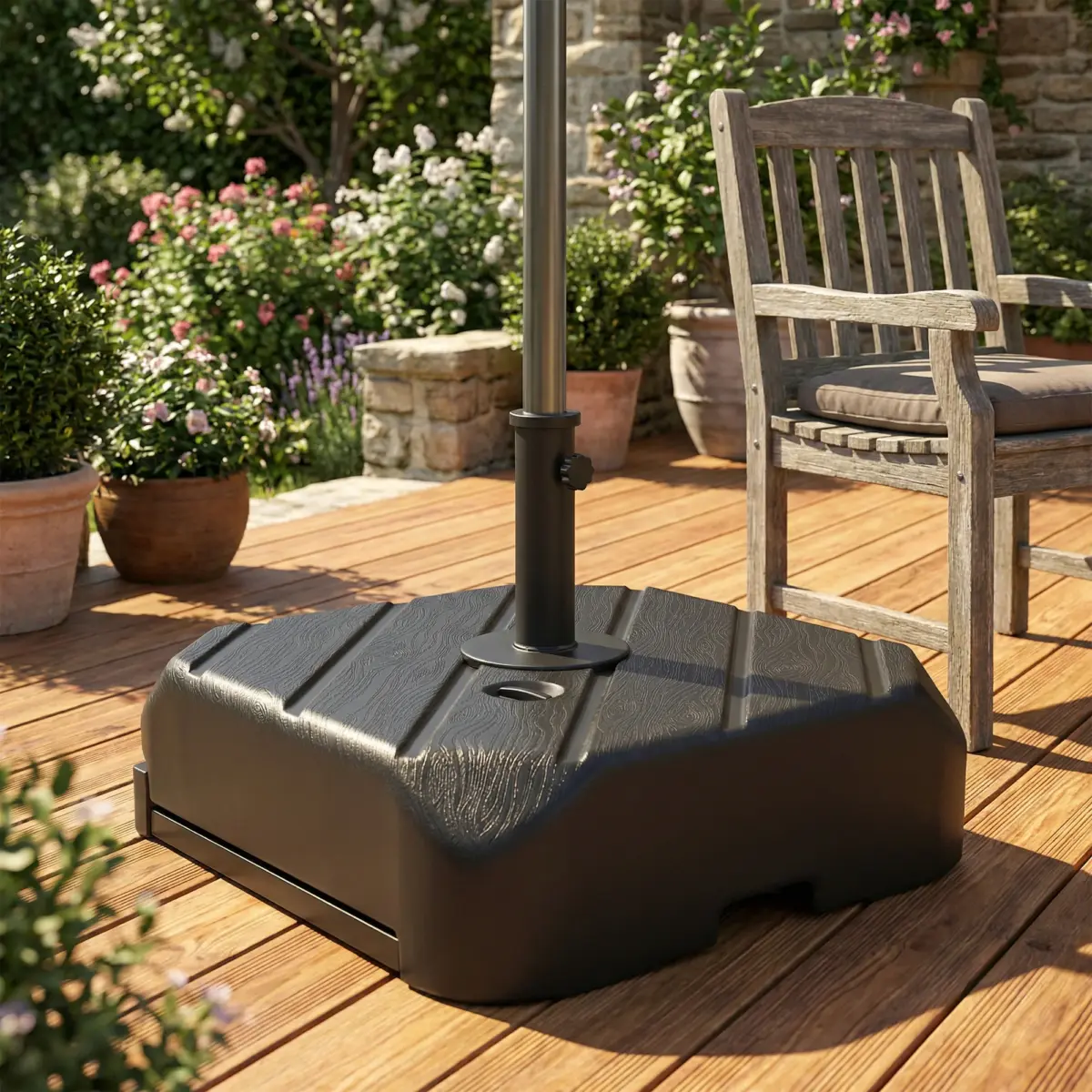
Refillable Patio Umbrella Base with Wheels and Telescopic Handle
FREE shipping $91.99Select options This product has multiple variants. The options may be chosen on the product page -
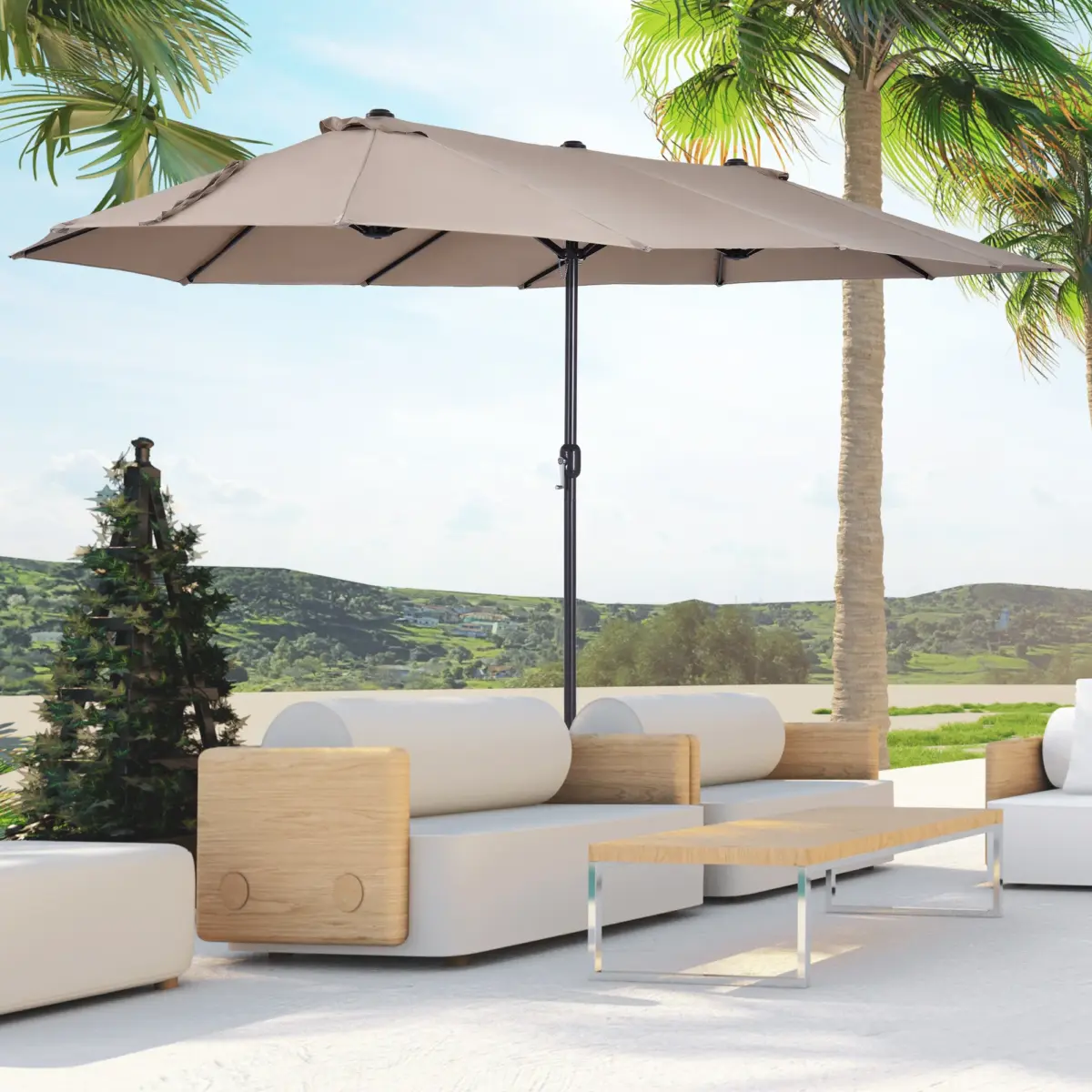
15 ft Double-Sided Rectangular Patio Umbrella, Crank Lift
FREE shipping $253.99Select options This product has multiple variants. The options may be chosen on the product page -
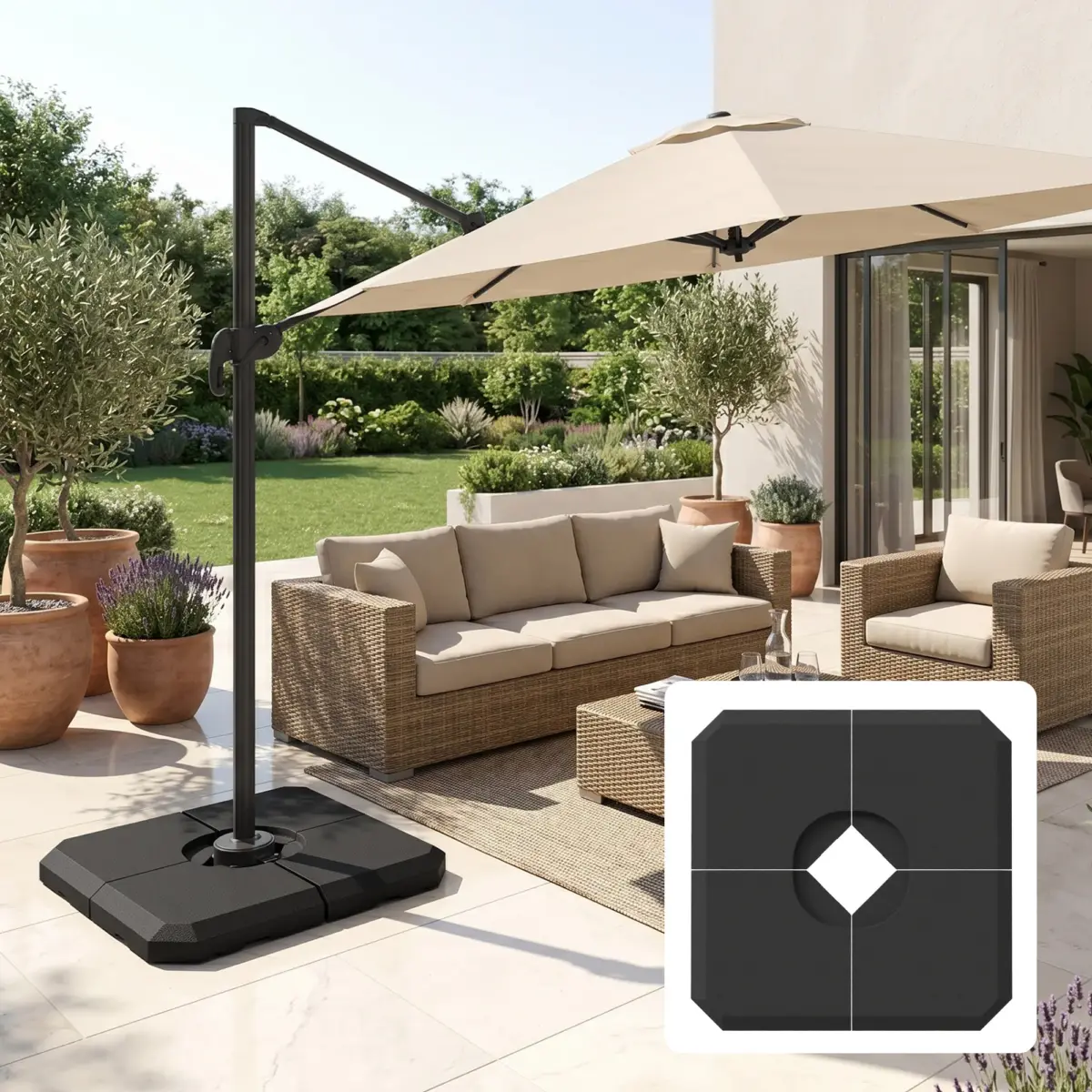
4-Piece Cantilever Umbrella Base Weight Set, Fill with Water
FREE shipping $133.99Select options This product has multiple variants. The options may be chosen on the product page -
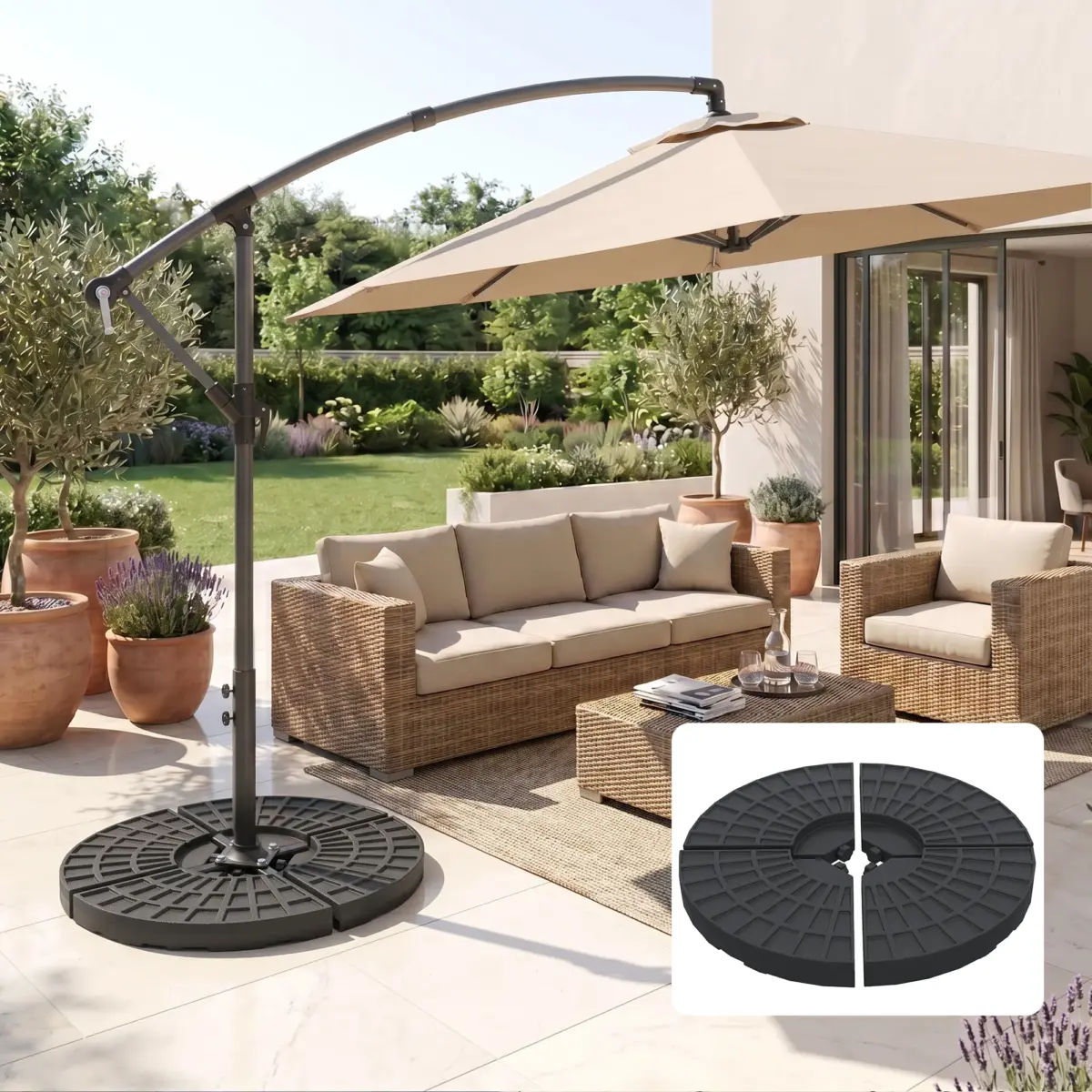
4-Piece Round Umbrella Base Weight Plates for Offset Umbrellas
FREE shipping $107.99Select options This product has multiple variants. The options may be chosen on the product page -
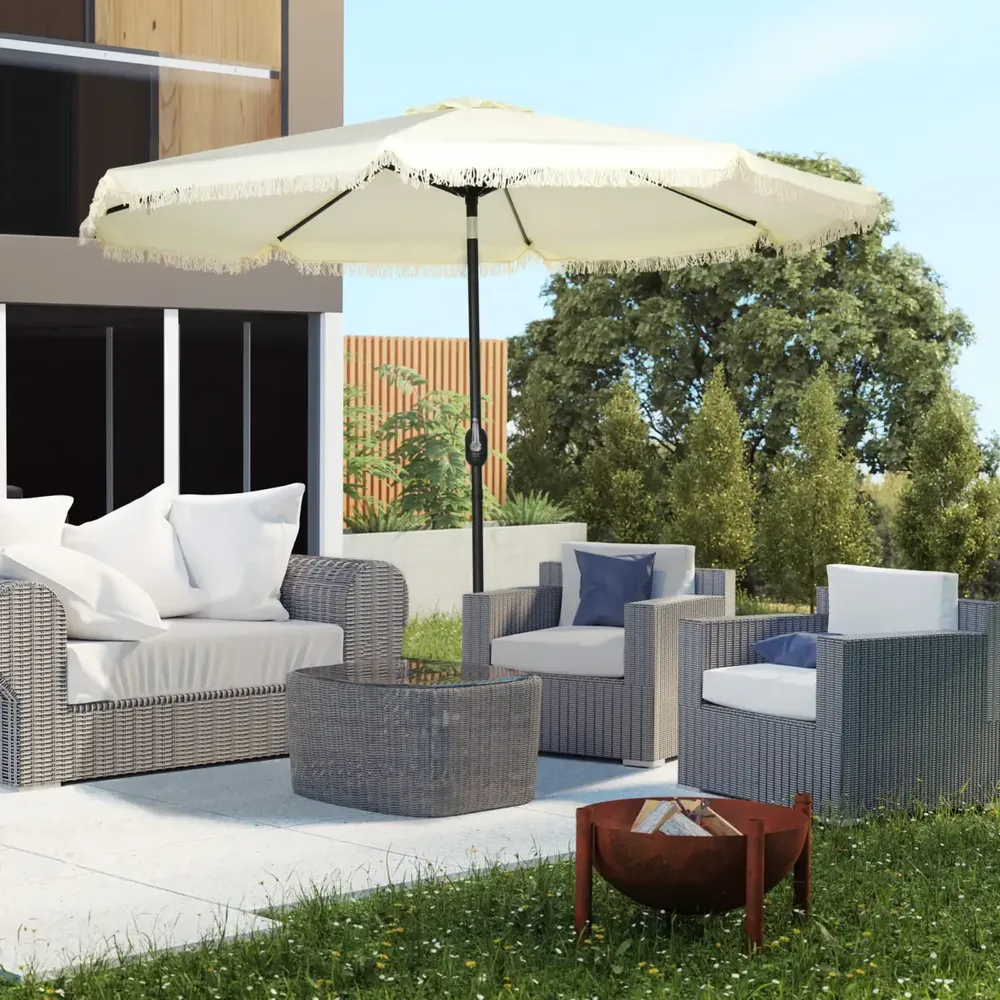
9 ft Patio Umbrella with 45-Degree Tilt, Fringe and Crank
FREE shipping $183.99Select options This product has multiple variants. The options may be chosen on the product page